The Tapestry Metaphor
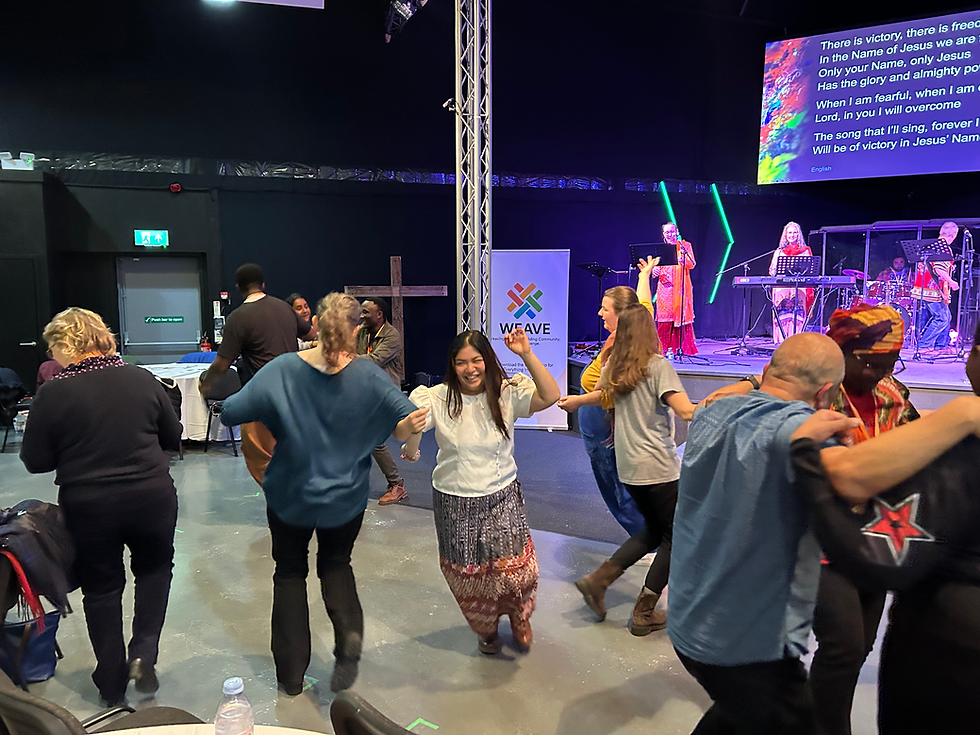
I am very excited that Weave is using the metaphor of tapestry to visualise the church because I have been using it, speaking and writing about it for more than 30 years. From October 1987 until August 2019 I was a pastor at Greenford Baptist Church (GBC) in West London. During this time the church transitioned from being a White British congregation, to one with people from approximately forty-five nationalities regularly attending. During worship different languages were used with songs, dance and prayer in styles that were used ‘back home’. Every aspect of congregational life reflected the cultures from the different ethnicities that made up the congregation. My doctoral research, completed in 2022, investigated how this transition occurred, and the use of the tapestry metaphor was a key component.
My use of the metaphor originates from Colossians 2:2; ‘I want you to be woven into a tapestry of love’ (Message version). One of the most significant features of this metaphor is that in a tapestry the picture is revealed only by the distinctiveness of the threads. These distinctives arise from the different ethnicities and cultures represented within the congregation. From Ephesians 2:8-10 and Romans 1:19-20 the phrases ‘masterpiece’ and ‘everything God made’ (the same Greek noun) make clear that it is the church that makes known to the world something of what God is like. John 13:34-35 makes plain that it is through our relationships with one another that God is made known. Using the tapestry metaphor we see that it is through the juxtaposition, acceptance and development of difference that an image of God is revealed.
In a tapestry the colour that there is most of, usually the background colour, is the least significant. Colours that stand out because they only occur occasionally often indicate the most significant detail. This means that cultures or ethnicities that there are least of within the congregation can be the most significant. An implication of this for GBC was that it tried to ensure that the ethnic and cultural uniqueness of each ethnicity was expressed within GBC so that all can be enriched. Always guiding was Revelation 7:9-12 an image of heaven, our destiny. It seems from this image that distinctiveness of ethnicity both in physical appearance and language is something that lasts into heaven. There is something about our joining together as one, but with our differing ethnicities, that is reflective of the nature of God. There is a real sense that living this out on earth is an anticipation of heaven.
In Willie Jennings’ book After Whiteness (2020) Jennings draws on the understanding he developed in The Christian Imagination (2010) to assert that the goal of Western Education/Society is to promote ‘white self-sufficient masculinity’ (2020: 8). In contrast, Jennings claims God’s goal is the creation of ‘the crowd, that is the gathering of hurting and hungry people who need God … people who would not under normal circumstances ever want to be near each other’ (2020: 13). Jennings wrote of a ‘diseased centeredness … sickened by whiteness’ growing from ‘the pedagogical imperialism of the Euro-colonialists’ that shaped education, language, ideas and ‘rituals of evaluation’ (2020: 140-141). Putting this in more everyday language Jennings is arguing that at the heart of European education/society everything is shaped/distorted by making the attitudes and values that are normal for White Europeans males the standard by which everything is judged. Jennings describes the ‘consistent refusal … to place oneself in the journey of others … where I am willingly changed … by non-white peoples’ and thereby ‘to release oneself to the crowd’ (2020: 141). It is striking, from the findings of the research at GBC, that people did allow themselves to be changed and enriched by their encounters with people from different ethnicities. Jennings further comments that ‘in the long histories of Western colonial education, rarely if ever have people or peoples been allowed to name and voice … disagreements separate from the refereeing positioning of whiteness’ (2020: 142).
Need to unpack this a little. We White British people instinctively tend to make our assessments of just about everything by our own White British standards/viewpoints. For example start times. In much of the world an arrival/start time set by a time on a clock is not used. In other cultural contexts the answer to the question ‘what time will the service start?’ leads to the response ‘when people have arrived’. You cannot build an inter-ethnic community where only one way of valuing things matters. In my research there was clear evidence that within GBC the ability to disagree without White Britishness being the only reference point was developed.
This research showed that the research participants at GBC had developed friendships that freely crossed ethnic and cultural boundaries. From these friendships a community was built where White Britishness as an organising conviction had been moved from the centre. At GBC a viable and stable genuinely inter-ethnic church congregation seems to have been formed. Although practical and structural changes were clearly important, the prominent role of the tapestry metaphor in the life of the church seems to have been a crucial element in enabling this process. It is significant that the tapestry metaphor envisages engagement that moves beyond just Black and White. The ethnic landscape in Greenford was far more complex than a binary construct of Black and White with Asians, Chinese, Eastern Europeans, Latin Americans and Middle Easterners also among the church members. The tapestry metaphor, with a diverse range of colours, is a visualisation of the inclusion of people from any ethnic group. What developed at GBC seems to be an embodiment of a theological conviction that all human beings are of equal value. The insight that this metaphor had seemingly overwritten what Jennings describes as a ‘diseased social imagination’ (2010: 6) is perhaps the most significant finding of my research.
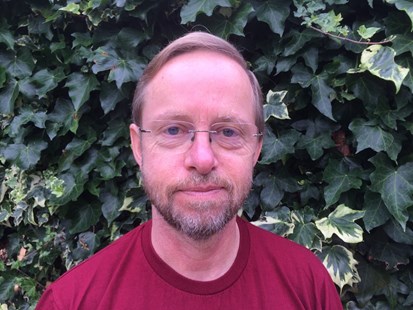
Revd Dr David Wise is a Baptist minister. He now works as a mentor/coach for Christian leaders who are either working inter-ethnically or cross-culturally, he also speaks at churches and conferences and writes for publication. He can be contacted via LinkedIn www.linkedin.com/in/dr-david-wise-104b37298
References
Jennings, W.J. (2010) The Christian Imagination: Theology and the Origins of Race. New Haven, CT; London: Yale University Press.
Jennings, W.J. (2020) After Whiteness: An Education in Belonging. Grand Rapids, MI: Wm. B. Eerdmans Publishing Co.
My doctoral thesis Developing a genuinely multi-ethnic local church congregation: an auto-ethnographic investigation into Greenford Baptist Church 1987-2014. Wise, D. J. (15 Feb 2022) is available at https://pure.roehampton.ac.uk/portal/en/studentTheses/developing-a-genuinely-multi-ethnic-local-church-congregation
Polyphonic God: Exploring Intercultural Theology, Churches and Justice, (2025) Israel Olofinjana, David Wise and Usha Reifsnider (eds) London, SCM Press.

Comments