Intercultural Ministry and Mission Is a Discipleship Journey, Not a Diversity Project

Updated: Jul 10
Below are my reflections following our Intercultural Learning Exchange yesterday.
A special thank you to all the church and charity leaders who joined the online conversation. Your openness, wisdom, and willingness to engage with challenging questions made the discussion both enriching and encouraging. We are grateful for your contribution and look forward to continuing this important journey together. To read a summarised version of the conversation click
Many churches today are becoming more culturally diverse. New people are arriving in our communities through migration, education, work, and changing neighbourhoods. This presents both an opportunity and a challenge. The question is no longer whether our communities are becoming multicultural. The real question is whether our discipleship is preparing us to live, worship, and serve faithfully with people who are different from us.
Too often, intercultural ministry and mission is treated as a diversity project. Churches organise international food events, celebrate different cultures, or invite people from different backgrounds to take part in services. These activities can be valuable, but they are not enough. Diversity may change who is in the room, but it does not automatically change the hearts of the people in it.
Intercultural ministry is first and foremost a discipleship journey.
Jesus never called His followers simply to tolerate one another. He called them to love one another as He loved them. That kind of love requires transformation. It asks us to examine our attitudes, assumptions, fears, and prejudices. It challenges us to put aside pride and learn from others. It invites us to see every person as someone made in the image of God.
This journey is not always comfortable.
Each of us has been shaped by our family, our nation, our traditions, and our experiences. These influences affect how we read Scripture, how we worship, how we lead, how we communicate, and how we understand church. Without realising it, we can mistake our cultural preferences for biblical truth.
Discipleship helps us recognise the difference. As we mature in Christ, we become more willing to ask difficult questions.
What parts of my faith are rooted in Scripture?
What parts are simply cultural habits?
Where do I need to listen more carefully?
How can I love people whose experiences are very different from mine?
These are not diversity questions. They are discipleship questions.
The early church understood this challenge. Jews and Gentiles, rich and poor, men and women, slaves and free people all found themselves becoming one family in Christ. Their unity was not created by ignoring their differences. It was formed through learning to follow Jesus together. They wrestled with difficult issues, listened to one another, prayed together, and allowed the Holy Spirit to reshape their understanding of community.
The same is true today.
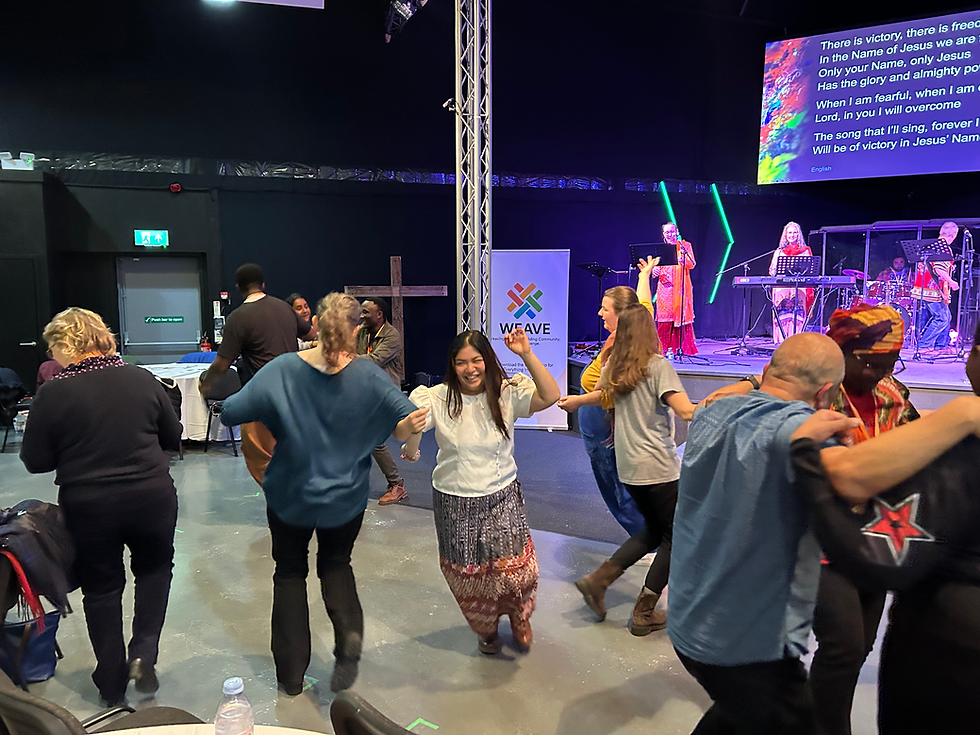
An intercultural church is not simply a church with many cultures present. It is a church where people are intentionally becoming more like Christ together. It is a place where humility replaces superiority, curiosity replaces suspicion, hospitality replaces exclusion, and reconciliation becomes a normal way of life.
This kind of transformation takes time. Like every aspect of discipleship, it is a lifelong journey. There are no shortcuts.
Church leaders therefore need to move beyond programmes and events. They need to help people grow spiritually through biblical teaching, honest conversations, shared experiences, and meaningful relationships across cultures. They need to create spaces where people can learn from one another, challenge one another with grace, and discover together what it means to belong to one body with many parts.
When intercultural ministry is understood as discipleship, diversity becomes more than a statistic. It becomes a testimony to the transforming power of the gospel.
The Church has a unique opportunity in a divided world. While society often separates people according to race, culture, politics, or nationality, the Church can demonstrate another way. It can show that people who would otherwise remain strangers can become brothers and sisters because of Christ.
This is not achieved by better diversity strategies alone. It is achieved by becoming better disciples.
The future of the Church will not be shaped simply by how many cultures we welcome. It will be shaped by how faithfully we allow Jesus to transform us into people who love, serve, and belong together across every cultural boundary.
Intercultural ministry is not an optional programme for a few churches. It is an essential part of becoming the people Jesus calls us to be.
Join us in Birmigham 3rd - 4th Feb. 2027 as we dig deeper into what it means to go beyond intercultural



Comments